
Hiking
7-Day Sahara Desert Trek from Marrakech
Experience: Beginner, Improver
From €1100
Highlights
Walk deep into Morocco's Sahara on a seven-day route that mixes long desert days on foot with Berber culture, palm oases and golden dunes far from the busiest tourist tracks. Your camel caravan team carries camp kit while you trek across hamada, small dunes and quiet plateaus, sleeping under the stars in tents for most of the trip before a cultural finish at Atlas Studios and Ait Ben Haddou.
🎒 Key Details
- Duration: 7 days
- Format: Private tour, confirmed on request
- Walking: Around 5 to 6 hours trekking per day on desert trails
- Start and finish: Marrakech pickup; return to Marrakech on the final day via the High Atlas
- Overnights: Guesthouse or desert camp, wild camps in tents, and a night in Ouarzazate before the drive back
🧭 What to Expect
After breakfast in Marrakech you cross the High Atlas and follow the Draa Valley south toward the desert gateway at M'hamid, with your first night near Oulad Driss. From day two you walk with your guide and camel team through rocky hamada, sacred sites and open Sahara country toward Erg Smar, with camp set each evening away from roads and villages.
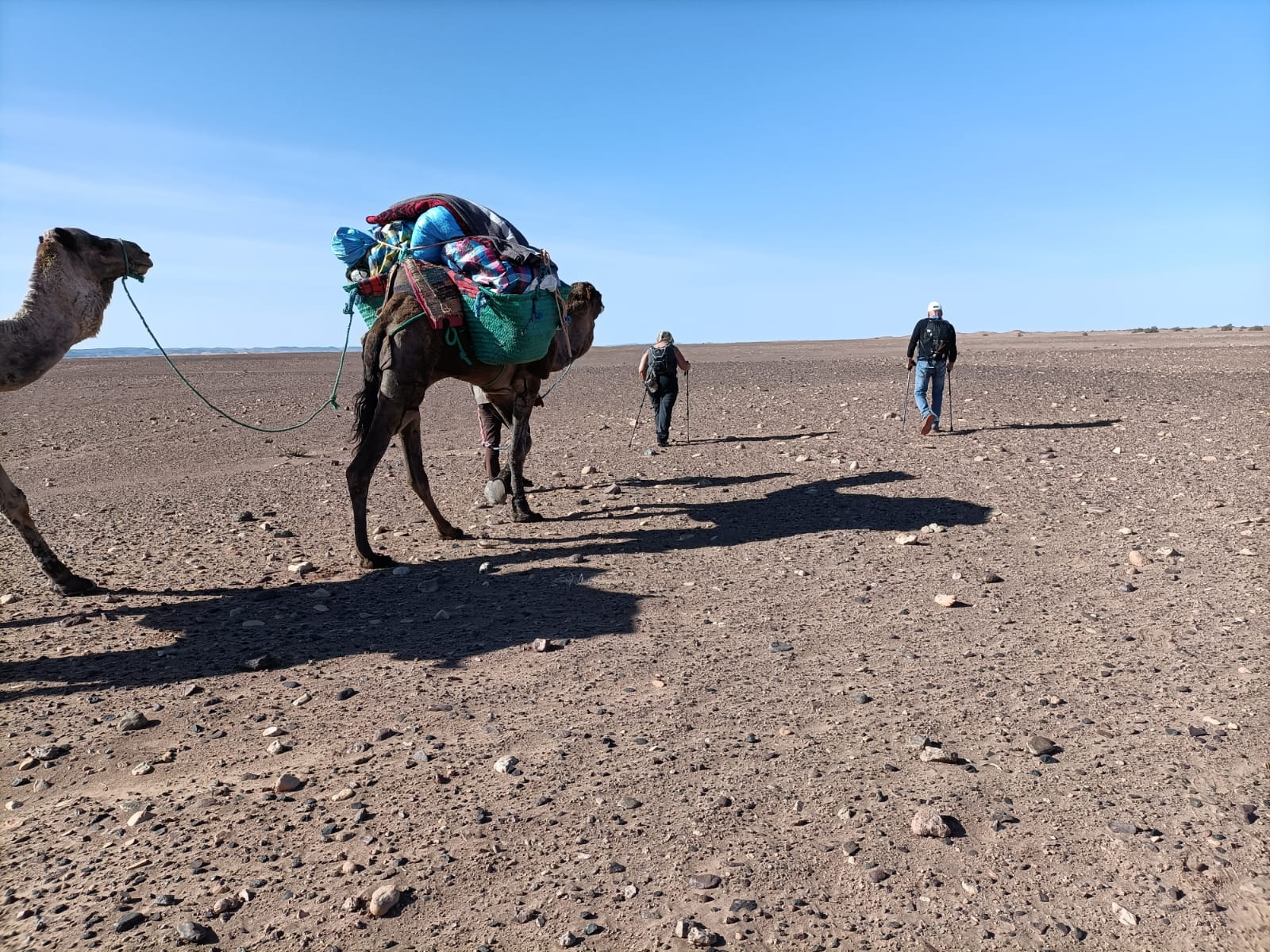
Each walking day runs for around five to six hours with regular stops for mint tea, lunch cooked on the trail and time to take in the silence of the hamada, small ergs and wide plateaus. Evenings are spent in tents under clear skies, with your crew handling camp setup and meals while you rest for the next day's march.
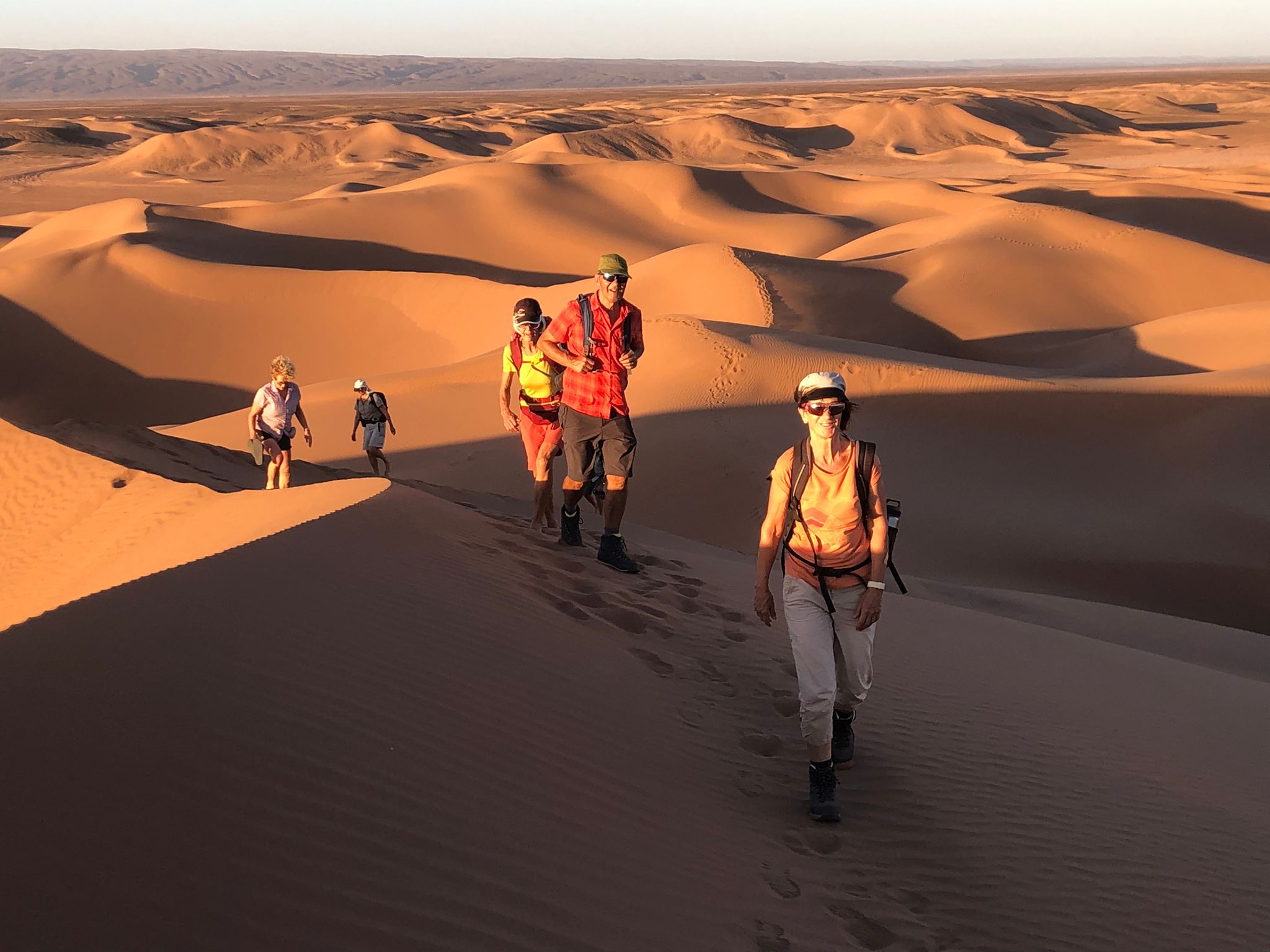
The pace is steady rather than rushed, with time to watch sunset on the dunes, share tea with your crew and notice oasis palms and nomad camps when routes cross their paths. The last trekking day reaches M'hamid El Ghizlane for the road transfer to Ouarzazate, where you visit Atlas Studios and the kasbah at Ait Ben Haddou before the scenic Tizi n'Tichka drive back to Marrakech.
📍 Location
The trip links three distinct Moroccan landscapes: the snow-capped High Atlas passes above Marrakech, the long green corridor of the Draa Valley with its kasbahs and date palms, and the open Sahara south of M'hamid where hamada, ergs and dry riverbeds define the horizon.
Walking stages pass places such as Sidi Naji, the Zhair area, Erg Smar and Oued Naam, names that mean little on a map but mark quiet, remote country where the night sky and morning light on sand are the main spectacle. Ouarzazate adds a cinematic side to the finish, with studio sets and the fortified village of Ait Ben Haddou above the river.
✅ Prerequisites
You do not need technical climbing skills or prior desert experience, but you should be comfortable walking five to six hours a day on sandy, rocky and sometimes uneven ground with a daypack. Hot sun, cool nights and dry air are normal, so pacing, hydration and sensible layers matter more than speed.
If you have questions about fitness, kit or how wild camping works on the route, message before you book so the team can advise on preparation. Nomad families move with their herds, so sightings are a bonus when paths cross, not a guaranteed part of every departure.
🌟 Why Choose Us
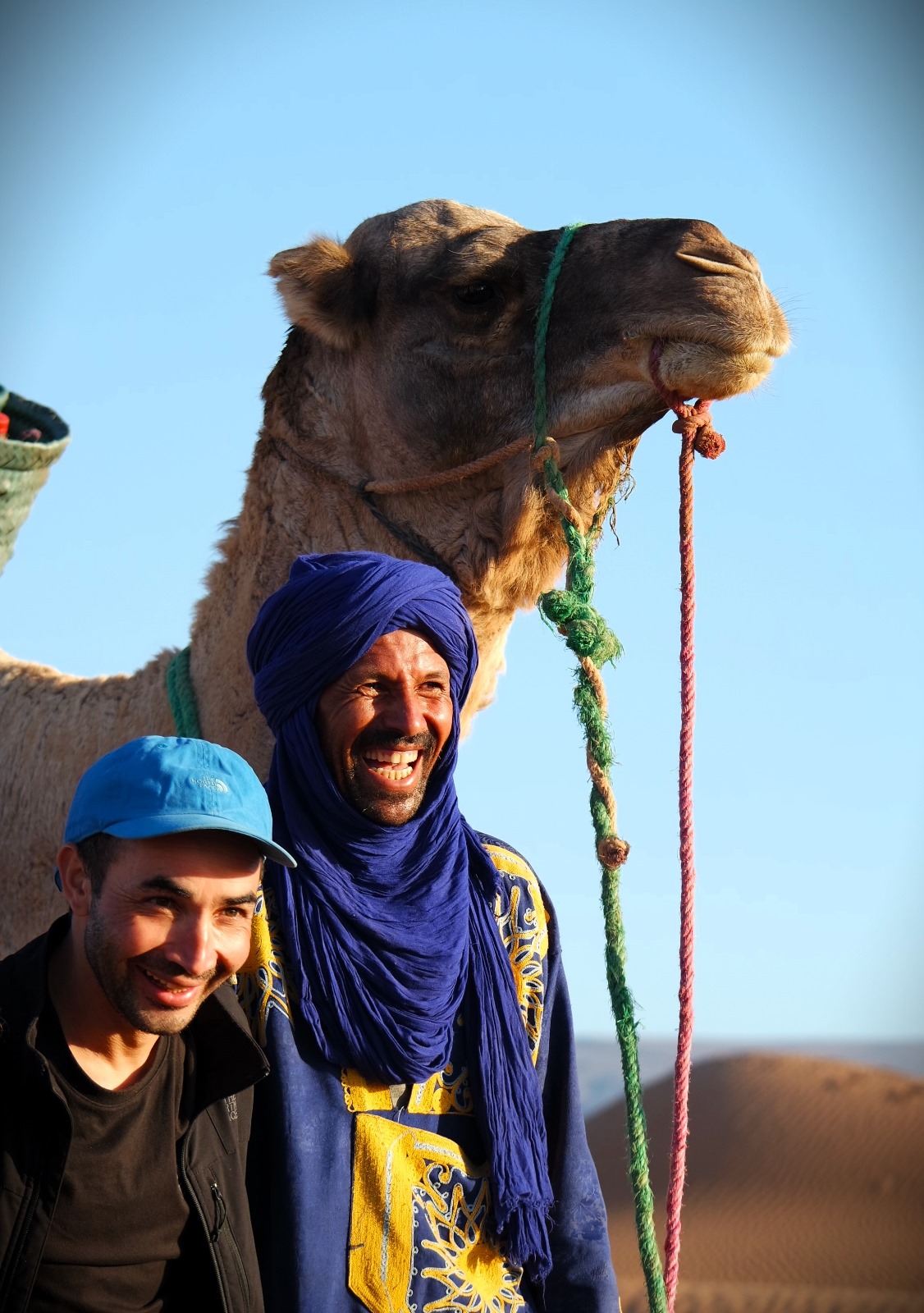
Desert weeks are run by local guides, cooks and camel handlers who know the M'hamid corridors and camp routines intimately, with English spoken alongside French and Arabic on the trail. Groups are kept to a human scale so the week feels personal rather than convoy-like, and the same crew travels with you from the first camp fire to the last dune sunrise.
Logistics from Marrakech pickup through meals, tents and the Ouarzazate sightseeing day are handled in one package, which past trekkers often mention when they talk about how smoothly long Moroccan trips run. You arrive with a clear day-by-day plan and a team focused on safety, comfort within simple camps, and sharing Berber hospitality along the way.
What's included
- Pickup and road transfers between Marrakech, the Draa Valley, M'hamid, Ouarzazate and back to Marrakech as described in the itinerary
- Experienced desert guide and camel caravan team for the trekking stages
- Camping equipment and tent accommodation on wild-camp nights
- Guesthouse or desert camp accommodation on the first night near Oulad Driss
- Accommodation in Ouarzazate on the night before the return drive to Marrakech
- Meals during the trip as provided by the mountain and desert cook
- Visit to Atlas Studios and Ait Ben Haddou on the final sightseeing day
What's not included
- Travel insurance
- Personal expenses and tips for your guide, cook and camel team
- Soft and alcoholic drinks
- Transport to and from the meeting point in Marrakech
Itinerary
🚐 Day 1: Over the Atlas to Oulad Driss
After breakfast you leave Marrakech by vehicle, climbing through the High Atlas and descending into the Draa Valley with its Berber villages and palm groves. Photo stops break up the drive as the landscape turns drier toward the desert fringe.
You reach Oulad Driss, near M'hamid, in time to settle into a guesthouse or desert camp for the night before the walking starts tomorrow. Dinner is a chance to meet your guide and camel team and hear how the week ahead will unfold.
🐪 Day 2: Hamada trails to Sidi Naji
The desert trek begins with your camel caravan team, walking across hamada and smaller dunes toward the sacred marabout of Sidi Naji. The day is on foot with luggage supported by the caravan, at a pace suited to the heat and terrain.
Evening brings a wild camp under the stars, with tents pitched away from traffic and the silence of the open desert around you. Expect around five to six hours of walking.
🏜️ Day 3: Deeper Sahara toward Zhair
You continue south through varied desert country, crossing flat plains and low dunes as the route pushes into remoter Sahara. The Zhair area is known for quiet, open spaces where few other groups pass.
Another night in a wild camp keeps you close to the night sky and morning light on the sand. Walking time is again in the five to six hour range with breaks for tea and lunch prepared by the cook.
🌅 Day 4: Golden Erg Smar
Today's route aims for the dunes of Erg Smar, one of the visual highlights of the trek, where golden sand rises in soft curves ideal for late-afternoon light. You have time to climb a dune crest and watch the colour change at sunset.
Camp is set among or beside the erg, depending on conditions, for another tent night under clear skies. The walking is moderate in difficulty but memorable for the scenery.
🌄 Day 5: Sunrise dunes to Oued Naam
An early start lets you enjoy sunrise over the dunes before breakfast and the day's march toward Oued Naam, a dry riverbed framed by desert cliffs and gravel plains. The contrast between soft sand and stony oued makes for varied footing.
You camp wild again in the evening, with the crew handling tents and meals while you rest tired legs. Total walking stays within the usual five to six hour window.
🛻 Day 6: M'hamid and road to Ouarzazate
A shorter trek brings you to M'hamid El Ghizlane, where your driver meets the group for the transfer north through the Draa Valley to Ouarzazate. The road journey takes around four to five hours with breaks.
You check into accommodation in Ouarzazate and have a quieter evening after the last full desert camp night. This is the transition from trekking boots to the cultural visits planned for the final day.
🎬 Day 7: Studios, kasbah and return to Marrakech
The morning starts with a visit to Atlas Studios, then continues to the UNESCO-listed ksar of Ait Ben Haddou, the fortified earthen village familiar from many films. You have time to walk the lanes and viewpoints above the river.
After the visit you cross the High Atlas via the Tizi n'Tichka pass back to Marrakech, with the drive taking roughly four to five hours. The trip ends with drop-off at your accommodation in the city.
Kit list & what to bring
- Sturdy broken-in walking boots and breathable socks
- Light trekking trousers and shorts suitable for heat
- Warm fleece or down layer and hat for cold desert nights
- Sun hat, sunglasses and high-factor sunscreen
- Soft-sided main bag for the camel caravan plus a small daypack
- Head torch, refillable water bottles and personal toiletries
- Sleeping bag liner or light sleeping bag if you prefer your own bedding in tents
- Cash in local currency for personal extras and tips
FAQs
How challenging is the walking each day?
Plan for around five to six hours of trekking on most days across sand, gravel hamada and occasional rocky sections. The pace is adjusted for heat and group fitness, with regular stops for water, tea and lunch prepared by the cook.
You carry only a daypack with essentials while the caravan handles heavier bags. Broken-in boots and a steady walking rhythm matter more than speed.
Do I ride camels or walk?
This is a walking trek supported by a camel caravan team who move camp equipment and luggage. Camels are part of the desert tradition on the route, but the daily activity is on foot unless your guide suggests a short ride for rest in exceptional heat.
If you need to limit walking for health reasons, contact the team before booking so they can advise honestly on what is possible on this remote route.
What are the camps like at night?
Wild camps use tents pitched by the crew in open desert locations chosen for shelter and safety. Facilities are simple: no fixed bathrooms, and washing is limited to bowls of water or wet wipes you bring yourself.
Evenings usually include a cooked dinner around the fire or in the mess tent, then an early night under stars with little light pollution. A sleeping bag liner or light sleeping bag you are comfortable in makes tent nights more pleasant.
When is the best season to book?
Cooler months from October through April are the most comfortable for long desert walking, with milder days and cold nights. Late spring and early autumn can still work with earlier starts and more water stops.
High summer heat makes long trekking days harder, so the team may suggest different dates if you enquire for July or August. Mention your preferred month when you send a request.
Is this the same as an Agafay day trip from Marrakech?
No. Agafay is a rocky desert close to the city, often visited on single-day camel outings. This week reaches the real Sahara south of M'hamid with multi-day trekking, wild camps and the Erg Smar dunes.
If you want a short taste of desert scenery without a full week away, ask about shorter products separately. This listing is only for the seven-day Marrakech to Ouarzazate circuit described in the itinerary.
Will we meet nomad families?
Nomad families move with their herds across wide areas, so encounters depend on where routes cross at the time of your trip. Guides welcome friendly contact when it happens naturally and will explain customs if you are invited for tea.
Because movement is seasonal, the team cannot promise a specific meeting on a given date. The focus of the week remains the landscape, walking and Berber hospitality within your own crew.
What meals are provided?
A cook travels with the desert team and prepares traditional Moroccan meals at camp and on the road, typically tagines, couscous, bread, salads and mint tea. Breakfast and dinner are at camp or guesthouse, with packed or freshly cooked lunches during walks.
Let the team know about allergies or vegetarian needs when you book so menus can be planned in advance. Soft drinks and alcohol are not included unless stated at confirmation.
How does pickup in Marrakech work?
You are collected from your accommodation in Marrakech on the first morning after breakfast, or at an agreed central meeting point such as Hotel Ali if your riad is hard to reach by car. The same approach applies on the final day when you are dropped back in the city.
Share your hotel name, group size and flight times when you request dates so drivers can plan realistic pickup windows. Book at least 24 hours ahead where possible.
What should I budget for tips?
Tipping the guide, cook and camel handlers is customary in Morocco though amounts are personal. Many guests set aside a modest daily contribution shared across the crew at the end of the trek.
Bring cash in dirhams for tips and small purchases, as card machines are rare once you leave the cities. The team can suggest typical ranges when you meet them if you are unsure.
Is travel insurance required?
Comprehensive travel insurance that covers trekking, remote evacuation and medical treatment in Morocco is strongly recommended for a week in the desert. Check that your policy does not exclude multi-day hiking or camping.
Carry a copy of your policy details and emergency contacts on your phone and on paper. The operator can advise on nearest clinics in towns on the road network, but wild camps are far from hospitals.
Reviews
What travellers say
“Really good communication before trip with Omar. Great guide and experience with Ibrahim. Adapted trek for 3 adventurous kids to be as hard/challenging as we wanted. Great pace and great fun as well. Really nice atmosphere.”
“I had Youssef as my guide, and he was a very friendly person who helped and supported me a lot throughout the hike. The hike turned out to be much more difficult than expected, especially the ascent to the summit.”
“At last I realized my long desire to touch the highest point, Toubkal 4,167m. I feel happy with the fact that I finished Two-day Mount Toubkal Climb with safety. I ran 10km twice a week as a process of preparation. With that preparation, I was able to finish it.”