How to Train for Mount Toubkal: Fitness and Preparation
By the Atlas Mountains Hike team
Mount Toubkal is a trek, not a technical climb — in summer there’s no rope work or special skill required. But at 4,167 m it’s still a serious mountain, and the people who enjoy it most are the ones who arrive prepared. For an honest take on difficulty and summit-day demands, read how hard Mount Toubkal is. Here’s how to get ready, from a team that’s guided thousands of summits from Imlil.
How fit do you need to be?
You need good general fitness and the ability to walk 5–7 hours a day on steep, uneven ground, two or three days running. You don’t need to be an athlete. If you can comfortably manage a long hilly day-hike with a daypack, you have the base to build on.
Summit day is the big one: an early start, a long ascent up scree to the top, and the descent all the way back. It’s the effort that surprises people, not the difficulty — so train for endurance and downhill control, not speed.
A simple 8-week plan
You don’t need a gym. The best training for walking uphill is… walking uphill.
- Weeks 1–2: Two or three 45–60 minute walks a week, plus one longer weekend walk on hills.
- Weeks 3–5: Build your weekend walk to 3–4 hours with a loaded daypack (5–7 kg). Add stairs, hills, or a treadmill incline midweek.
- Weeks 6–7: A back-to-back weekend — a long walk Saturday and Sunday — to rehearse multi-day fatigue. Practise descending; your knees and quads do real work coming down.
- Week 8: Ease off. Arrive rested, not exhausted.
Break in your boots well before the trip. Blisters end more summit attempts than fitness does.
Three things people under-train
- Going downhill. The descent from the summit is long and hard on knees and quads. Train it deliberately — walk down hills, not just up — and consider trekking poles to save your legs.
- Time on feet. It’s the hours, not the pace, that tire you. One long walk beats three short fast ones.
- Walking with a pack. Even a light daypack changes your balance and effort. Always train with the pack you’ll carry.
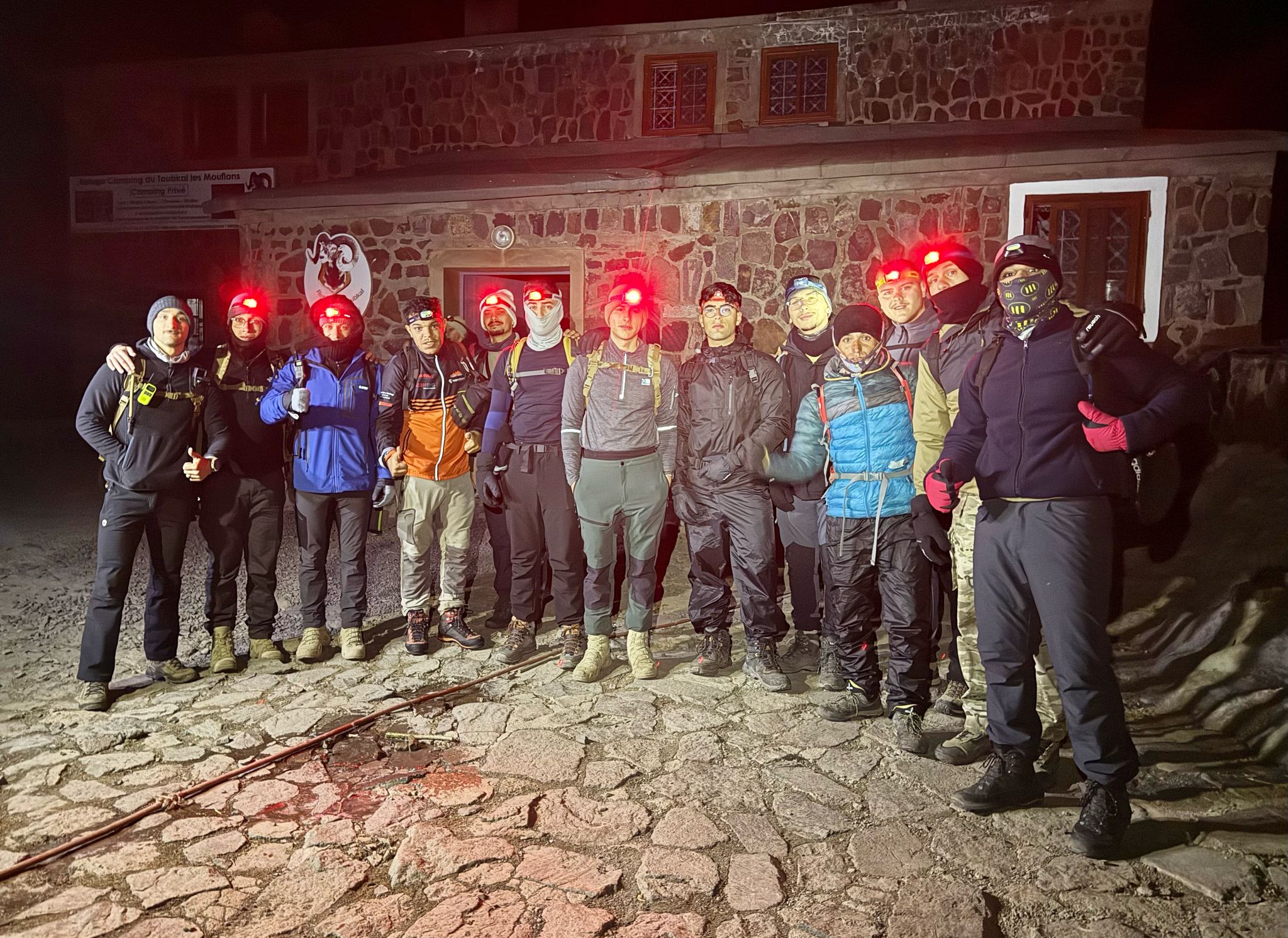 Summit day starts before dawn — endurance and warm layers matter more than raw speed.
What about altitude?
Above ~3,000 m the thinner air makes everything feel harder, and some people feel mild altitude effects — headache, breathlessness, poor sleep. The best defences are going slowly and giving your body time to adjust.
This is exactly why we recommend the 3-day Toubkal ascent over the faster 2-day climb for many people — the extra acclimatisation makes summit day more comfortable and your odds of reaching the top higher. Drink plenty of water, eat well, and tell your guide how you feel; they manage the pace for the group.
Recognising altitude sickness
Mild symptoms (headache, breathlessness, broken sleep, low appetite) are common and usually pass. The golden rules: climb slowly, hydrate, and don’t ignore how you feel. Tell your guide about any symptoms — they’re trained to spot when something needs attention. If symptoms are severe or worsening (confusion, severe headache, vomiting), the only reliable cure is to descend, which from Toubkal is quick and straightforward. Going at the right pace, serious altitude illness on Toubkal is rare.
Kit checklist
| Category | Bring |
|---|---|
| Footwear | Broken-in boots with ankle support; camp shoes/sandals |
| Layers | Base layer, fleece, warm insulated jacket, waterproof shell |
| Legs | Trekking trousers; warm layer for the summit |
| Head & hands | Warm hat, sun hat, gloves, sunglasses |
| Summit day | Headlamp, sun cream, lip balm |
| Sleep | 3-season sleeping bag for the refuge |
| Carry | Daypack (~20–30 L); the mules take the rest |
| Health | Personal first-aid, blister plasters, any medication, water bottle |
| Winter only | Crampons & ice axe — we provide technical gear + a winter-trained guide |
A more general version for the whole country is in our what to wear in Morocco guide.
Let us handle the rest
Beyond your own fitness and kit, you don’t need to organise a thing. Our guides plan the route and pace, the cook handles meals, and muleteers carry the loads — so you can focus on the walking and the views. That local support is a big part of why first-timers summit successfully with us.
When you’re ready, choose a Toubkal trek or ask Omar how to prepare for your dates and the season you’re climbing in.
Ready to trek?
Browse our packages