Mount Toubkal Summit Trek: Route, Refuge & Summit Day Guide
By the Atlas Mountains Hike team
At 4,167 metres, Mount Toubkal is the highest peak in North Africa — and one of the most rewarding treks in Morocco. In summer it’s a non-technical climb: no ropes, no climbing skills, just long days on steep mountain terrain with thinner air above 3,000 m. This guide walks through the route, summit day, and what our Imlil guides handle so you can focus on the walk.
Quick answer: the standard Toubkal route
| Stage | From → To | Time | Altitude |
|---|---|---|---|
| Day 1 | Imlil → Toubkal refuge | 5–6 hrs | 1,740 m → ~3,207 m |
| Day 2 | Refuge → summit → Imlil | 8–10 hrs | Up to 4,167 m, back to 1,740 m |
Most climbers use the 2-day route; the 3-day ascent adds acclimatisation and improves summit comfort. For difficulty and fitness, see how hard Mount Toubkal is; for timing, see the best time to climb.
The route: valley to summit
Every climb begins in Imlil (1,740 m), the trailhead village south of Marrakech — read our Imlil gateway guide if you’re arriving early. From there the path climbs through Aroumd and up the Mizane valley, following an old mule trail past shrines, streams, and high pasture. You’ll overnight at the Toubkal mountain refuge (~3,200 m), a simple, warm base camp tucked into the cirque below the summit.
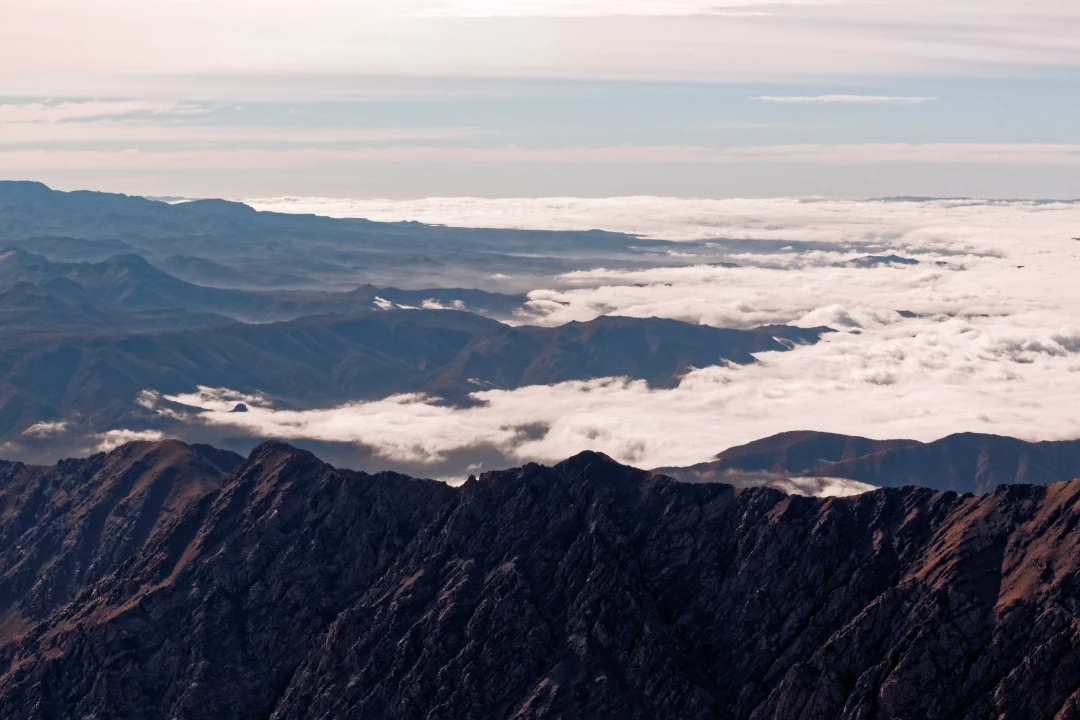
Summit day starts before dawn. By headlamp you climb the scree slopes to the Tizi n’Toubkal col (~3,940 m), then up the final ridge to the metal pyramid that marks the top. On a clear morning the reward is staggering: the whole Atlas range below you, the Sahara haze to the south, and Marrakech somewhere on the plain to the north.
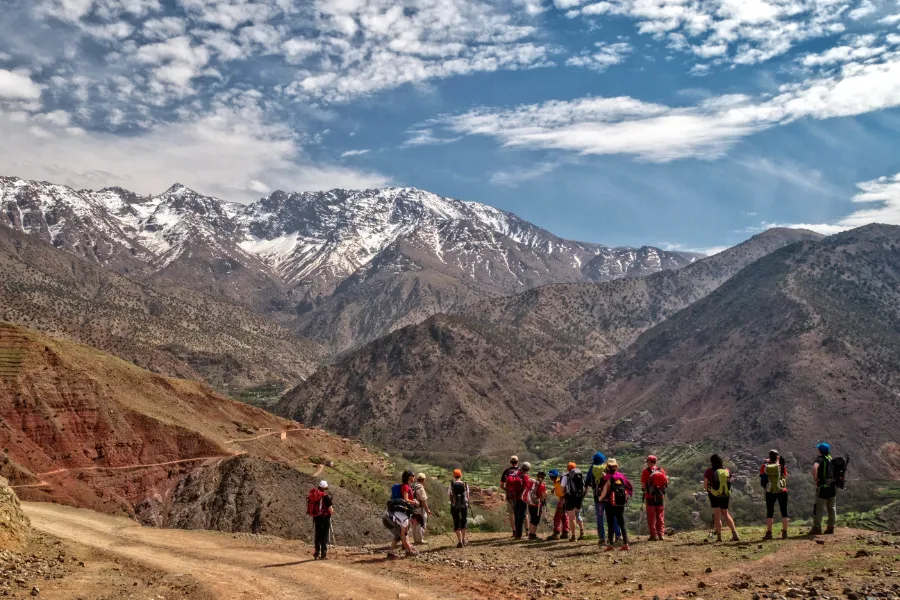 The approach valleys set the scene — but summit day is what most people remember.
Summit day, hour by hour
From the refuge (~3,200 m), a typical summer summit day looks like this:
- 04:30–05:00 — Wake, quick breakfast, head-torches on.
- 05:00–09:00 — Climb scree (and seasonal snow) to the col, then the final ridge.
- 09:00–10:00 — Summit. Photos at the pyramid; panoramas across the Atlas.
- 10:00–13:00 — Descend to the refuge for lunch.
- Afternoon — Continue down to Imlil on the 2-day route, or rest at the refuge on the 3-day.
The descent is often harder on the legs than the climb. Training for downhill matters as much as uphill fitness.
What our team handles
Our certified guides — accredited by the Royal Moroccan Federation of Skiing and Mountaineering — handle navigation, pacing, and safety. Local cooks and muleteers take care of meals and luggage. You carry only a daypack. Since 2019, a licensed local guide is mandatory for Toubkal — booking with an Imlil team means proper accreditation, not an unofficial operator from the city.
Frequently asked questions
Do I need climbing experience? No — in summer Toubkal is a strenuous walk, not a technical climb. You need good fitness and stamina. See how hard is Mount Toubkal and our training guide.
How long does it take? Two days covers the climb itself; three days adds acclimatisation that makes summit day easier. Compare routes on our Toubkal treks hub.
What’s the refuge like? Basic but warm — shared dorm-style rooms, hot meals cooked by your team, bedding at ~3,200 m. Bring a sleeping bag; conditions are spartan but cosy after a long day.
Is there an age limit? No hard rule — we’ve guided fit teenagers and trekkers in their sixties. Fitness and pace matter more than age. Families might prefer an Imlil day trip first.
What if I don’t make the summit? Your guide prioritises safety over the top. Even a turned-back summit day in the valleys and at the refuge is worth the journey.
More than a summit
What stays with people isn’t only the top. It’s the mint tea in Aroumd, the cook’s tagine under the stars at the refuge, the muleteers on the trail. Toubkal is a serious mountain wrapped in warm Berber hospitality — and that combination is what makes it unforgettable. More on village life in our Berber hospitality guide.
Ready to stand on the roof of North Africa? Browse our Toubkal treks or ask Omar which route suits you.
Ready to trek?
Browse our packages